Canada Visitor Visa applicants are facing the toughest scrutiny in years, and the numbers behind this shift are bigger than most people realize. If you are planning to apply for a Canada Visitor Visa in 2026, you need to understand exactly what has changed, why it changed, and what it means for your own application. This guide breaks down everything Immigration, Refugees and Citizenship Canada (IRCC) has revealed about the Canada Visitor Visa system, verified directly against the department’s own 2026 Deputy Minister transition binder, and explains how Callmaimo Consulting can help you navigate the new Canada Visitor Visa landscape with confidence.
Is the Canada Visitor Visa News Legit? Here’s Our Verification
Before diving into the details, it is fair to ask whether the recent wave of headlines about the Canada Visitor Visa system is trustworthy. We cross-checked the claims against Canada’s official government transparency page, which hosts the IRCC Deputy Minister Transition Binder 2026: Temporary Immigration — How Visitors Come to Canada, published on Canada.ca with a page date of September 4, 2026. We also compared the figures against earlier IRCC transition binders from 2024 and 2025, the department’s published Deputy Minister appointment records, and its 2025–26 Departmental Plan. Every core claim about the Canada Visitor Visa framework — the layered screening model, the use of biometrics, the existence of a Global Risk Framework, and the distinction between country-level visa policy and individual visa decisions — lines up with IRCC’s own public record. In short, the story behind the Canada Visitor Visa shake-up is real, sourced from an official government document, and not internet speculation.
Canada Visitor Visa Screening Is Now Tighter Than Ever
IRCC has confirmed that Canada Visitor Visa screening has become significantly more rigorous. The department says its Visa Policy Framework relies on more than 40 criteria to decide whether to impose, lift, or partially lift a visa requirement for citizens of any given country. This framework has quietly shaped Canada Visitor Visa policy for more than 20 years, but it has never been described in this much public detail before.
The disclosure came through IRCC’s 2026 Deputy Minister transition binder, a document prepared for incoming senior officials that lays out the department’s priorities, structure, and opera
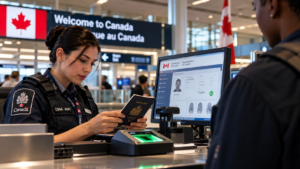

2026, up from roughly 5.6 million in 2025. That volume includes both the Canada Visitor Visa (formally called a Temporary Resident Visa) and the Electronic Travel Authorization (eTA).
IRCC also confirms that its visitor-integrity strategy, launched in the summer of 2024, has already reduced fraud and tightened Canada Visitor Visa screening across the system. This is not a minor administrative tweak. It reflects a structural shift in how Canada evaluates who gets to visit, and it has direct consequences for anyone preparing a Canada Visitor Visa application today.
What Are Canada’s 40+ Visitor Visa Criteria?
The headline number driving this story is simple: more than 40 criteria now inform Canada’s Visa Policy Framework. IRCC uses these criteria to evaluate the risks and benefits of requiring or waiving a visa for citizens of a particular country. This is the backbone of the broader Canada Visitor Visa system, even though it operates one level above individual applications.
According to the transition binder, the examples IRCC provides include:
- Safety and security concerns — assessing whether travel from a country poses risks to Canadians
- Passport integrity and identity management — how reliable a country’s travel documents are
- Bilateral benefits — trade, tourism, and diplomatic relationships that make travel facilitation valuable
- Migration trends — including asylum claims and immigration violations such as unauthorized work or study
IRCC has not published the complete list of all 40-plus factors, but these four categories give a clear picture of how the Canada Visitor Visa policy machine actually works. Canada is one of the few countries with the flexibility to fully or partially lift a visa requirement for a nation’s citizens, and that flexibility is guided entirely by this criteria-based framework.
The 40+ Criteria Are Not a Checklist for Your Personal Canada Visitor Visa Application
This is the single most misunderstood part of the story, so it deserves its own section. The more-than-40 criteria apply at the country level, not the individual level. They determine whether citizens of a specific country generally need a Canada Visitor Visa (a Temporary Resident Visa) or can travel visa-free with an eTA instead.
Your personal Canada Visitor Visa application is assessed completely separately, based on your own circumstances, documents, and credibility. IRCC has been explicit that the 40+ criteria should never be described as a checklist scored against every individual applicant. Once a country is designated as visa-required, each person from that country who applies for a Canada Visitor Visa goes through their own case-by-case review. Understanding this distinction is essential if you want to make sense of what “tighter Canada Visitor Visa screening” actually means for you personally.
What IRCC Checks on an Individual Canada Visitor Visa Application
While the 40+ criteria shape national policy, your actual Canada Visitor Visa application is judged on a different set of factors entirely. IRCC officers manually review Temporary Resident Visa applications and evaluate an applicant’s intent using indicators the department has publicly identified. When you submit a Canada Visitor Visa application, expect an officer to examine:
- Your travel history
- Family ties to your home country
- Employment status and history
- Current immigration status
- Marital status
- Family history
- Education history
- The stated purpose of your visit to Canada
- Supporting documents submitted with the Canada Visitor Visa application
- Your ability and intention to leave Canada at the end of your authorized stay
- Your ability to financially support yourself during the visit
- Health admissibility
- Security admissibility
- Criminal admissibility
IRCC states that all inadmissibility assessments require case-by-case analysis based on the facts and evidence in front of the decision maker. Importantly, the department does not publish a minimum bank balance, a point-scoring system, or a fixed financial threshold for a Canada Visitor Visa application. Having a thin travel history or an unconventional employment situation will not automatically sink your Canada Visitor Visa application — but it does mean your supporting documents need to tell a clear, consistent, and credible story.
In some cases, a Canada Visitor Visa application may be referred for deeper screening by the Canada Border Services Agency (CBSA) or the Canadian Security Intelligence Service (CSIS). IRCC frames this as something that “may” happen, not a routine step every Canada Visitor Visa applicant should expect.
India and China Lead Canada Visitor Visa Demand
IRCC’s transition binder names India and China as the top visa-required source countries for Canada. This reflects the sheer volume of Canada Visitor Visa demand coming from these two countries rather than any specific risk label attached to their citizens. The binder does not publish nationality-specific refusal rates or fraud statistics in this section, and IRCC is careful to frame tighter Canada Visitor Visa screening as targeted at patterns of abuse within top visitor populations generally — not as a blanket policy aimed at any one country.
If you are applying for a Canada Visitor Visa from India, China, or any other high-volume country, this simply means your application will be processed within a system built to handle enormous demand, and consistency in your documentation matters more than ever.
Canada’s Global Risk Framework and the Future of Canada Visitor Visa Screening
In September 2025, IRCC launched the Global Risk Framework (GRF) specifically for the Temporary Resident Visa line of business, which includes the Canada Visitor Visa. The GRF is designed as an early-warning system that proactively monitors the department’s overall ability to manage integrity risks tied to Canada Visitor Visa volumes.
Rather than approving or refusing any single Canada Visitor Visa application, the GRF operates at a macro level. It identifies emerging risk patterns across the entire Canada Visitor Visa system and enables IRCC to intervene before small problems become systemic ones. IRCC says the need for this more proactive approach was highlighted directly by the integrity strategy launched in the summer of 2024. In practice, this means the Canada Visitor Visa system is now being watched, adjusted, and fine-tuned continuously rather than reactively.
Biometrics: The Backbone of Canada Visitor Visa Identity Screening
Most Canada Visitor Visa applicants from visa-required countries must provide fingerprints and a photograph as part of biometric enrolment, with limited exceptions. IRCC shares this biometric data with allied governments, and Canada processes nearly 3.5 million biometric enrolments every year in support of its Canada Visitor Visa and broader immigration programs.
To support this volume, Canada operates 166 Visa Application Centres overseas, 82 Service Canada locations, and 130 U.S. Application Service Centres. Biometrics allow officers to screen Canada Visitor Visa applicants against RCMP records covering known criminals, past refugee claimants, individuals previously deported, and prior immigration applicants. Simply appearing in a prior record does not automatically harm a Canada Visitor Visa application — IRCC frames biometrics as a tool that supports better-informed decisions, not an automatic disqualifier.
Canada Visitor Visa vs. eTA: Understanding the Two Screening Tracks
Not every trip to Canada requires the same level of scrutiny. Canada currently screens inbound travellers through two very different tracks, and knowing which one applies to you is essential before you start any Canada Visitor Visa or eTA application.
The Canada Visitor Visa (Temporary Resident Visa)
The Canada Visitor Visa, officially known as a Temporary Resident Visa, is the heavier-touch option. A Canada Visitor Visa application collects your name, date of birth, place of birth, biometrics, immigration status, marital status, travel history, family history, education and work history, purpose of visit, and full supporting documentation. Every Canada Visitor Visa requires biometrics, a manual officer review, and physical inspection of your passport. Once approved, a visa counterfoil is physically placed inside your passport.
A Canada Visitor Visa can be valid for up to 10 years and may allow single or multiple entries. The cost is $100 plus an $85 biometric fee, making the total Canada Visitor Visa fee $185 for most first-time applicants.
The Electronic Travel Authorization (eTA)
The eTA is the lighter-touch alternative to the Canada Visitor Visa and applies only to citizens of visa-exempt countries travelling to Canada by air. It is fully digital, collects self-declared information, and does not require biometrics. IRCC reports that 85% to 90% of eTA applications are automatically approved within minutes, though some are flagged for manual officer review.
An eTA is valid for up to five years or until your passport expires, whichever comes first, and it allows multiple entries by air. The fee is just $7. The United Kingdom and France are IRCC’s top eTA source countries, a sharp contrast to the Canada Visitor Visa picture, where India and China dominate demand.
What Tighter Canada Visitor Visa Screening Means for Your Application
Given everything IRCC has confirmed, here is what a stronger Canada Visitor Visa screening environment realistically means if you are applying in 2026:
- Credibility of purpose matters more. Officers will closely evaluate whether your stated reason for visiting Canada is believable and consistent with your circumstances.
- Documentation must be airtight. Every Canada Visitor Visa application should include complete, consistent, and verifiable supporting documents.
- Ties to home matter. Strong evidence of employment, family, property, or other ties outside Canada strengthens your Canada Visitor Visa case.
- Financial proof should be clear. While there is no official minimum, your Canada Visitor Visa application should clearly show you can support yourself throughout your stay.
- Admissibility still applies. Health, security, and criminal admissibility checks remain a standard part of every Canada Visitor Visa review.
- There is no shortcut formula. IRCC’s emphasis on case-by-case review means no single trick guarantees a Canada Visitor Visa approval — but sloppy, inconsistent applications are far more likely to be flagged in this tighter environment.
The overall message from IRCC is balanced: Canada still wants to welcome genuine visitors who support tourism and the wider economy, but it is using smarter, risk-based tools to catch abuse of the Canada Visitor Visa system before it grows.
How Callmaimo Consulting Can Help With Your Canada Visitor Visa Application
Navigating a tighter Canada Visitor Visa environment alone is risky, especially when a single inconsistency in your documents can trigger delays or a refusal. This is exactly where Callmaimo Consulting comes in. Led by certified educational and immigration consultant Maimo B. Dzekashu, Callmaimo Consulting has helped applicants understand exactly what a stronger Canada Visitor Visa system expects from them — and how to present a case that holds up under scrutiny.
Here is how working with Callmaimo Consulting strengthens your Canada Visitor Visa application:
- Document review and preparation: Callmaimo Consulting helps you assemble a Canada Visitor Visa application package that is complete, consistent, and free of the small errors that raise red flags with officers.
- Purpose-of-travel guidance: The team helps you articulate a clear, credible reason for your visit, which is one of the most heavily weighed factors in any Canada Visitor Visa decision.
- Ties-to-home strategy: Callmaimo Consulting advises applicants on how to demonstrate strong ties to their home country, a key factor IRCC weighs in every Canada Visitor Visa review.
- Biometric and appointment support: With 166 Visa Application Centres worldwide involved in Canada Visitor Visa processing, Callmaimo Consulting helps clients navigate appointment logistics smoothly.
- Ongoing IRCC policy updates: Because Canada Visitor Visa rules and integrity measures continue to evolve, Callmaimo Consulting stays current on IRCC’s Global Risk Framework and related changes so clients are never caught off guard.
- A trusted track record: Callmaimo Consulting holds a 4.9-star Google rating from more than 162 reviews and represents 19+ designated learning institutions, reflecting a broader base of trust across immigration and study-abroad services.
Whether you are applying for your first Canada Visitor Visa or reapplying after a previous refusal, getting professional guidance before you submit can make the difference between approval and disappointment. Visit Callmaimo Consulting to start your Canada Visitor Visa journey with support from people who understand exactly how the current system works.
Frequently Asked Questions About the Canada Visitor Visa
Does every Canada Visitor Visa applicant get assessed against the 40+ criteria?
No. The more-than-40 criteria apply at the country visa-policy level and determine whether citizens of a specific country need a Canada Visitor Visa at all, or can travel visa-free with an eTA. Individual Canada Visitor Visa applicants undergo a completely separate, case-by-case assessment based on their own intent, documents, and admissibility.
What factors does IRCC assess on an individual Canada Visitor Visa application?
IRCC evaluates travel history, family ties to the home country, employment, immigration status, marital status, family history, education and work history, purpose of visit, supporting documents, ability and intention to leave Canada, financial self-sufficiency, and health, security, and criminal admissibility. Every Canada Visitor Visa decision requires case-by-case analysis based on the evidence provided.
What is Canada’s Global Risk Framework?
Launched in September 2025 for the Temporary Resident Visa line of business, the Global Risk Framework is a proactive, macro-level monitoring system for the Canada Visitor Visa program. It acts as an early-warning tool that identifies systemic risks and supports interventions, but it does not decide individual Canada Visitor Visa applications.
How many Canada Visitor Visa and eTA applications does Canada expect in 2026?
IRCC projects roughly 5.8 million total visitor applications in 2026, combining both the Canada Visitor Visa (TRV) and the eTA. In 2025, IRCC approved about 2,185,800 TRVs and 3,371,700 eTAs, for a combined total of roughly 5,557,500 visitor applications.
Is eTA screening as strict as Canada Visitor Visa screening?
No. The eTA is a lighter, fully digital screening tool with no biometric requirement, and 85% to 90% of eTA applications are approved automatically within minutes. A Canada Visitor Visa requires a detailed application, biometric enrolment, manual officer review, and physical passport inspection, reflecting a significantly higher level of scrutiny for visa-required travellers.
Final Thoughts on the Canada Visitor Visa System in 2026
The Canada Visitor Visa system has entered a new era of transparency and rigor. IRCC’s 2026 Deputy Minister transition binder confirms that more than 40 criteria shape the country-level Visa Policy Framework, that every individual Canada Visitor Visa application receives its own thorough, case-by-case review, and that recent integrity measures have already reduced fraud across the system. With close to 5.8 million visitor applications expected this year, the Canada Visitor Visa process is under more pressure — and more scrutiny — than ever before.
If you are planning to apply, the safest path forward is a Canada Visitor Visa application built on complete honesty, strong documentation, and a clearly demonstrated intention to return home. And if you want expert eyes on your file before you submit, Callmaimo Consulting is ready to help you put together a Canada Visitor Visa application that is built to withstand Canada’s tighter 2026 screening standards.
Further reading:
- Countries that need a visa to visit Canada — external source
- Canada’s top 10 visa refusal reasons — external source
- IRCC Deputy Minister Transition Binder 2026: Temporary Immigration — How Visitors Come to Canada — official primary source (external)
- Start your Canada Visitor Visa journey with Callmaimo Consulting — internal/CTA link
Disclaimer: This article is for general information only and does not constitute immigration or legal advice. Canada Visitor Visa applicants should confirm the latest requirements on the official Government of Canada immigration website and consult a licensed immigration professional, such as the team at Callmaimo Consulting, for guidance specific to their situation.